Pollution-reducing and draining concrete: an innovative concrete solution for our campuses
Staff life
Sustainable Development
Published on January 14, 2026–Updated on January 14, 2026
Dates
on the January 2, 2026
photo5
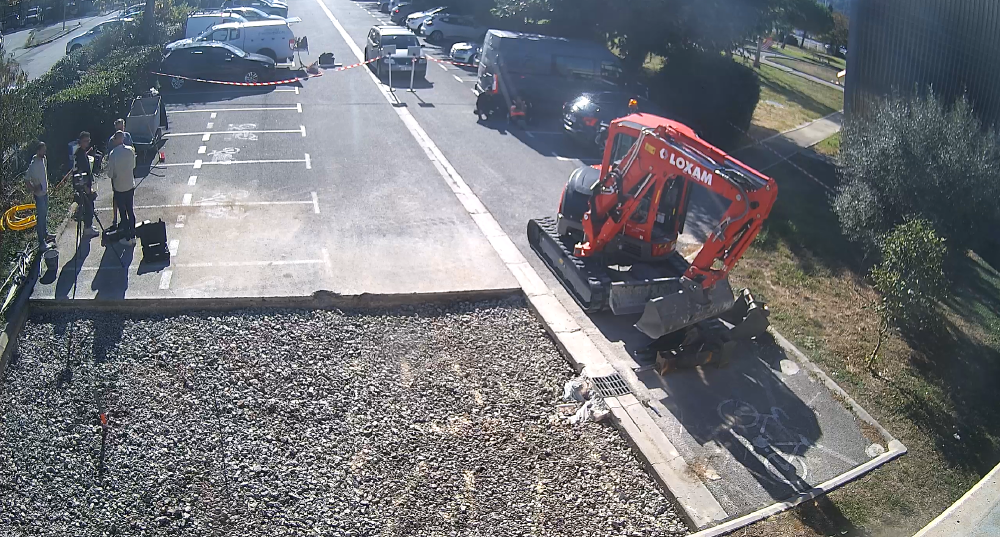
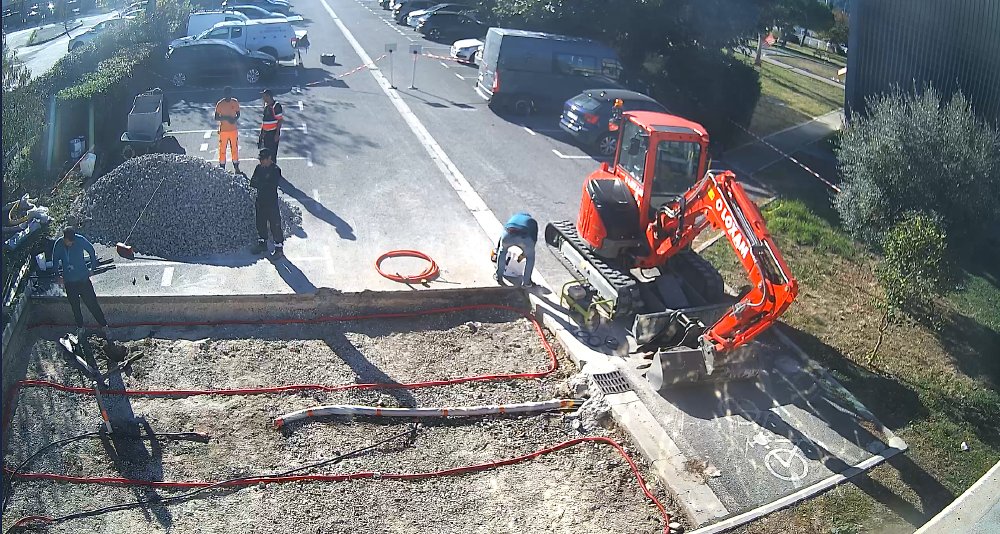
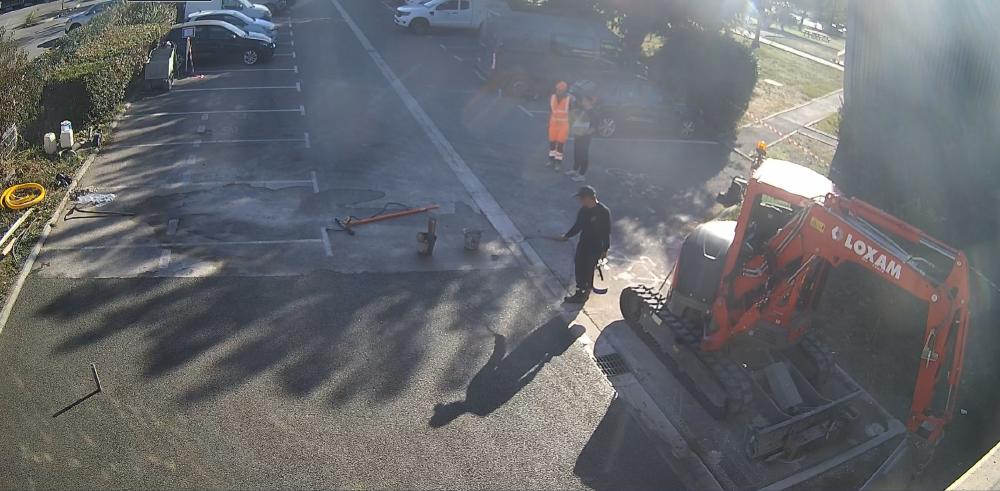
The university is rolling out an experimental pilot site on the de-impermeabilization of a parking lot surface for sustainable rainwater management.
De-impermeabilization is a process that involves removing or reducing impermeable surfaces (such as asphalt, concrete, or bitumen) to allow rainwater to naturally infiltrate the soil.
This area is of particular interest because it is located near the Var River on the alluvial aquifer, identified at a depth of approximately 10 meters, close to the Eau d'Azur water catchment areas. The campus environment has many impermeable surfaces that generate significant runoff. The data acquired is particularly useful for informing potential de-impermeabilization projects at the municipal or metropolitan level.
The experimental device is fully equipped for in-depth study.
Capacitive water content probes at different depths to monitor infiltration dynamics;
Piezometer equipped with CTD (conductivity, temperature, depth) probes to accurately quantify the volumes of water drained and infiltrated;
Electrical resistivity tomography (ERT) lines to visualize deep wetlands in 3D;
Collection and physicochemical analysis of drained water;
A remote transmission system transforms this site into a real-time scientific observatory, enabling continuous and dynamic monitoring of infiltration phenomena.
The pilot site therefore makes it possible to finely model infiltration and transfer in the tested material, identify the chemical composition of drained runoff water, and identify the risks and opportunities associated with de-impermeabilization in this neighborhood: potential groundwater recharge, reduction in runoff, quality of infiltrated water, and resilience to intense Mediterranean rainfall events.
Students involved in the project
A team of students from the Hydroprotech master's program is responsible for modeling surface water runoff and using the metrology data collected on the pilot plot to integrate these results into a broader hydrological and hydrogeological modeling approach.
This approach is of strategic interest in view of the de-impermeabilization projects that the University wishes to carry out (notably on the Trotabas campus) in order to capitalize on operational experience and in-depth knowledge of infiltration-based solutions.