The Festival of Active Teaching Methods Showcases Educational Innovation
- Education
- Innovation
on the June 11, 2026
Over the course of two days, more than 400 participants gathered at Université Côte d’Azur to share ideas, experiment, and develop new teaching methods. This inaugural event was marked by innovation, collaboration, and both high- and low-tech teaching approaches.
A inaugural event bringing together France’s higher education community
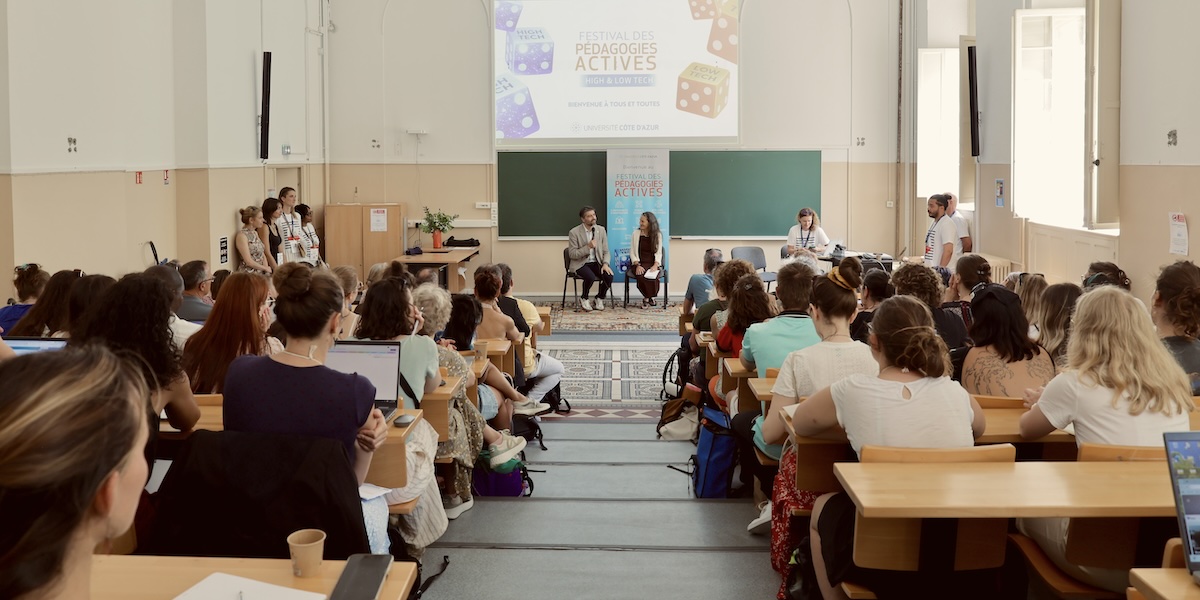
On June 4 and 5, Université Côte d’Azur hosted the first edition of the Festival of Active Pedagogies, organized by the Center for Pedagogical Innovation , with support from PIA L@UCA .
This national event dedicated to pedagogical innovation brought together more than 400 stakeholders in higher education and pedagogical innovation from across France.
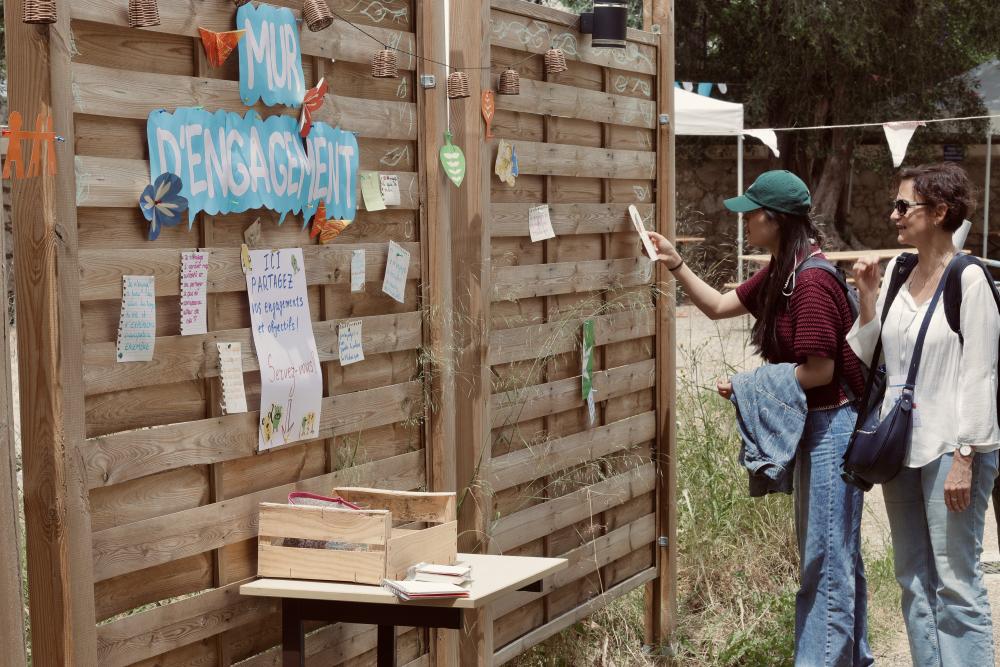
With over 400 participants over the two days, the festival confirmed the academic community’s growing interest in new approaches to teaching and learning. Over 60 activities were offered during the two-day event, including collaborative workshops, conferences, debates, high- and low-tech booths, a hackathon focused on artificial intelligence and reflexivity, a participatory mural, and a wall of commitment.
Renowned figures at the heart of the discussions
The festival offered participants the opportunity to engage with recognized experts in the field of education, including Jacques Tardif and Isabelle Nizet , professors at the University of Sherbrooke, François Taddéi , founder of the Learning Planet Institute; Julian Alvarez , professor at the University of Lille; and Bernadette Charlier , professor emerita at the Universities of Fribourg and Louvain.
Their presentations explored developments in higher education and the conditions that foster engagement, success, and skill development amid the transformation of teaching practices.
What a privilege it was to open this Festival of Active Pedagogies in Nice! I would also like to emphasize how much more stimulating this format proved to be, in my view, than a traditional conference. The precious time set aside to meet and discover other approaches makes all the difference. Bernadette Charlier , Professor Emerita of Education and Training Sciences at the University of Fribourg (Switzerland) and visiting professor at UCLouvain in Belgium
- Read Bernadette Charlier’s full testimonial
-
What a privilege it was to open this Festival of Active Pedagogies in Nice! I would also like to emphasize how much this format proved, in my view, to be far more stimulating than a traditional conference. The precious time set aside for meeting others and discovering different approaches makes all the difference. Here, social interactions take center stage, whether through discussions, workshops, booths, or the learning experience hackathon. You can really feel the presence of a true community, driven by enthusiasm and tremendous creativity.
The presentations offered also complemented each other beautifully. I am thinking in particular of François Taddéi’s closing remarks, in which he invites us to “educate for the world.” This is an idea that resonates deeply with my own message and one I would gladly express as the need to commit to becoming a Subject For the World.
At the heart of my talk, I specifically wanted to emphasize—by referencing Etienne Bourgeois’s proposals—that learning is a demanding process, a transformation of the self that requires accepting a degree of discomfort and “thinking against oneself.” Faced with the temptation of “fast thinking” and “fast AI,” it seemed essential to me to rehabilitate the long term, or “slow thinking.” It is in this famous “middle void”—that pause that leads to critical reflection—that students can truly construct their thinking. Low tech and high tech are by no means opposed: the challenge is to transform them into genuine tools in the service of subjectivation, so that every student can “become a Subject.”
A huge thank you to the Educational Innovation Center at the Université Côte d'Azur for organizing this event. As the program suggested: “Nothing beats experience,” and the experience lived and shared during this festival was, for me, particularly rich and inspiring!
High & Low Tech: Rethinking Educational Innovation
Under the theme “High & Low Tech,” this first edition explored the uses of digital technology and artificial intelligence in education;
- Generative AI: What are the implications for learners’ critical thinking and cognitive effort?
- From Tool to Experience: High Tech in the Service of Subjectivation
- Toward Augmented Assessment? Strengths and Limitations of Generative AI in Assessment
- From Low Tech to High Tech: Play, a Social Construction
- AI: A Hindrance or Catalyst for the Competency-Based Approach?
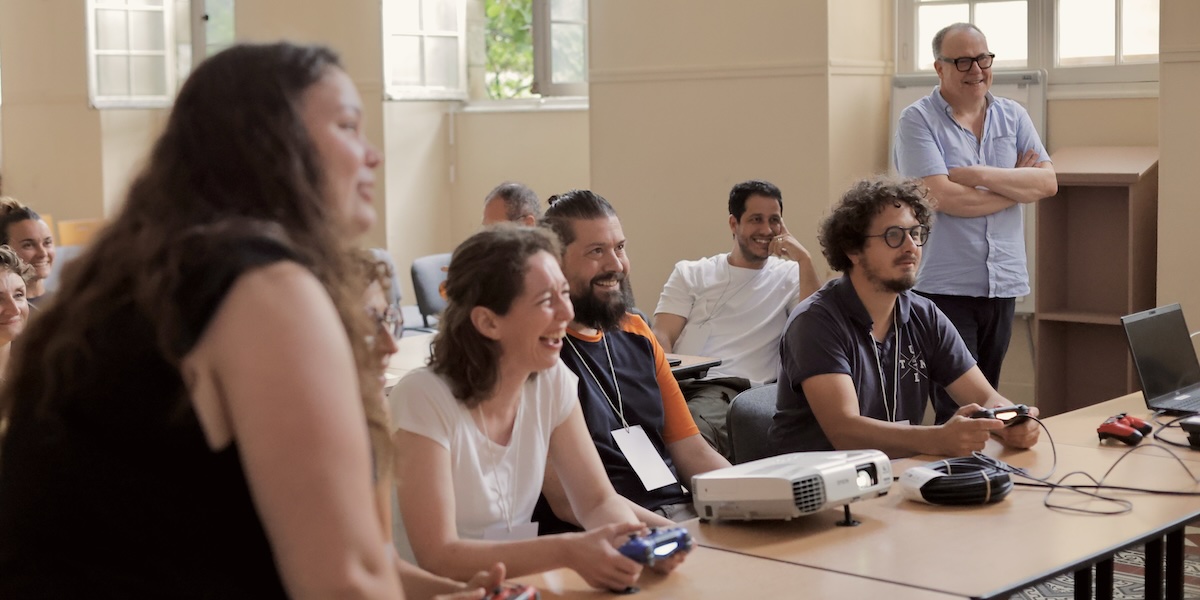
The diversity of formats and perspectives encouraged the sharing of experiences and collective reflection on the current challenges facing higher education. These conferences and workshops highlighted simple, creative, and sustainable approaches that foster engagement in learning.
An award to recognize educational innovation
The highlight of these two days, the Grand Prix for Pedagogical Innovation recognized 11 winning projects out of the 21 submissions received for their remarkable initiatives aimed at transforming teaching practices.
Learn more about the 2026 Pedagogical Innovation Awards
Driven by a strong collective spirit, the festival benefited from the involvement of numerous members of the university community, led by the Educational Innovation Hub. This mobilization contributed to the success of this first edition and to the richness of the discussions held throughout the event. We’re already looking forward to the 2027 edition!