Alumni Interview #23: Michel Tschann, President of SHIN HOTELS Nice
- Alumni
- Knowledge transfer - Industry
on the April 30, 2026
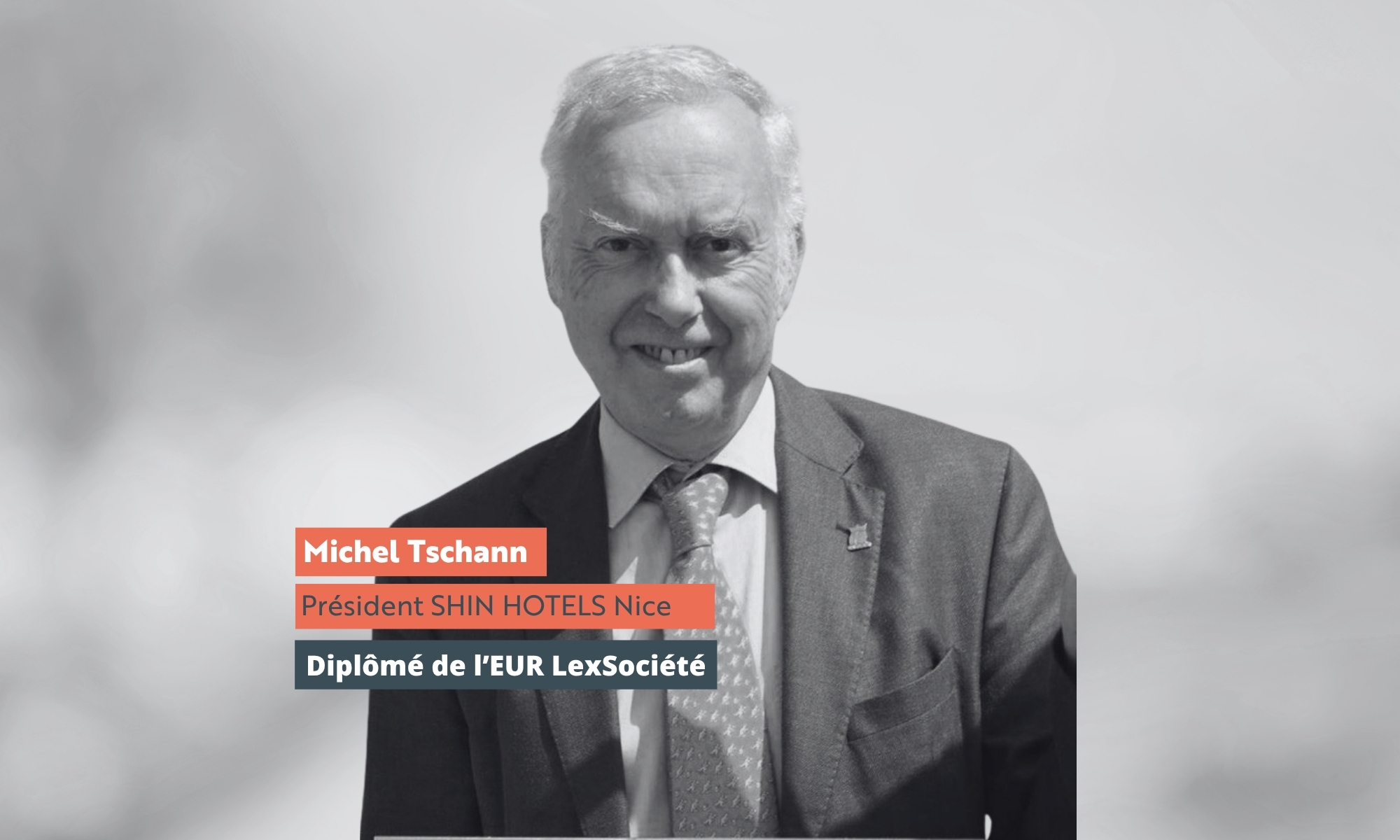
From law school to hotel management, Michel Tschann, a graduate in public law, has successfully combined academic rigor with an open-minded approach to the world. Through teaching, business management, and a passion for working with people, he brings a demanding yet curious perspective to his profession, characterized by adaptability and perseverance. Discover his journey.
What is your academic background?
I earned my bachelor’s degree in law at the Faculty of Law in Nice from 1967 to 1971. At the time, the bachelor’s program took four years to complete, which is no longer the case today.
After my military service, I went on to earn a specialized doctorate, a degree that no longer exists but is similar to today’s master’s degree in public law.
I also had the opportunity to teach, both at the university and at the Institute of Tourism. I really experienced this university up close, and I have very fond memories of it.
How did you choose the university?
Law is always useful, no matter what your professional future holds. Public law, even if it doesn’t lead directly to careers in private law, remains a solid foundation and a valuable field of study. Since I was born in Nice, the university was also close to home, which made things easier.
I was lucky, in my first year, to have excellent professors—Trotabas, but also Derrida—who taught us how to take notes, memorize them, and, above all, how to learn.
Professor Derrida insisted that we use a fountain pen rather than a ballpoint pen, because it’s much easier on the hand. And he was right.
How did your studies lead you to the career you pursued?
I come from a family of hoteliers, a tradition passed down from generation to generation. My son is taking over the business: he will be the fourth generation.
My career choice was practically decided even before I entered college. But college gave me additional knowledge and a rigor that proves invaluable in business.
I took over the entire hotel operation in 1991. My son took over the operation in 2013.
I think it was above all the discipline I acquired during my studies that made the difference.
Public law touches on politics in the noble sense of the term and helps you understand what’s happening in the world; it fosters a valuable open-mindedness.
Can you tell us about your daily professional life?
My daily routine is varied. As in any business, I have to manage staff, payroll, and administrative and legal formalities. In France, we have a certain penchant for formalities, and having a basic understanding of the law is a real asset.
But the most important thing in a hotel is still the guest: welcoming them, talking to them, and taking an interest in them.
Like all hoteliers on the French Riviera, we travel extensively to attract guests from all over the world—primarily the United States, the United Kingdom, and Japan—but also to lesser-known markets, such as Kazakhstan.
It’s a career that opens doors to the world and allows you to build relationships with colleagues—even competitors.
Do you have any advice for recent graduates?
Master English, first and foremost. No matter what field you’re in, it’s a requirement—and even more so in tourism.
For those passionate about the tourism sector, be flexible. Our industries operate seven days a week, and you have to know how to adapt.
No one can say for sure what jobs will exist in ten years: things are changing very quickly. Kodak and Nokia were giants twenty years ago; they’ve since declined. Our professions remain deeply human, but you also need to master technological tools: reservation systems, management, and artificial intelligence. Electronic invoicing is on the way, and that will require adaptation.
Finally, open yourself up to the world. We’re all different, and tensions exist, but traveling and discovering other countries is always enriching. And it often lets you come home with a fresh perspective, realizing that you might not be as badly off as you thought.
What is your biggest professional lesson?
Observe what’s being done elsewhere and know how to draw inspiration from it. By visiting hotels around the world, you spot ideas that can be adapted. For example, I saw wall sconces in New York that illuminated paintings and created an intimate atmosphere—I brought that concept back to our hotel. A curious eye is a tool in itself.
You also have to know how to listen to customers, especially through social media. Not everything is relevant, but some comments deserve attention.
What gets you out of bed in the morning?
My cat meowing!More seriously, understanding the world as it is today—complex and difficult.
Trying, in my own way, to understand what’s going on.
Do you have a motto?
It’s a phrase a Scottish friend once told me: “Press on”—an expression that means to keep moving forward, not to stop, and to persevere even when making mistakes.