on the April 23, 2026
Campus Valrose
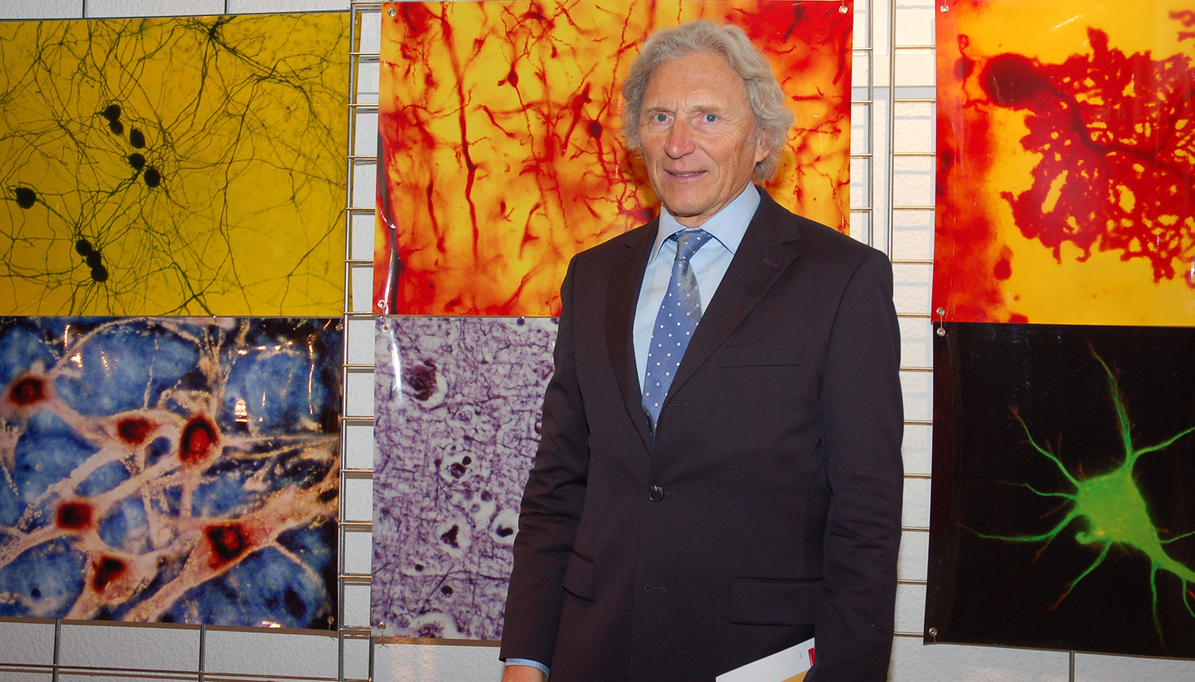
Awarded by Laval University at the Valrose campus, this honor recognizes an outstanding scientific achievement that has helped shape modern research on ion channels and their therapeutic applications.
Michel Lazdunski is a leading figure in the life sciences and molecular pharmacology. His work has profoundly shaped our understanding of the fundamental mechanisms of life and opened up long-term therapeutic prospects in several major fields of contemporary medicine.
He laid the foundations for life sciences education (Bachelor’s, Master’s, and Ph.D. programs) at Université Côte d’Azur (formerly the University of Nice). He structured biology research at the University by establishing the Biochemistry Center in Valrose, which has since become the Valrose Institute of Biology (IbV), and then by founding the Institute of Molecular and Cellular Pharmacology (IPMC) in Sophia. He was also responsible for establishing the Doctoral School of Life Sciences and Health in Nice; the school had previously been based in Marseille before he succeeded in bringing it to the Nice area.
Laval University (Quebec), a partner university of Université Côte d'Azur, is today awarding him an honorary doctorate in recognition of his exceptional scientific work, which has helped shape modern research on ion channels and their therapeutic applications. The event took place on April 23, 2026, on the Valrose campus in Nice, in the presence of Rector Sophie D’Amours and representatives from both universities.
The ceremony is part of the activities marking the 10th anniversary of the partnership between the two institutions, which has fostered the development of research collaborations, student and faculty mobility, and the sharing of expertise in areas of mutual interest.
A decisive contribution
Michel Lazdunski earned his first Ph.D. in physical chemistry at Laval University, followed by a second in biochemistry at the University of Marseille. He has devoted most of his career to the study of ion channels, true molecular machines at the heart of the functioning of the nervous system, the heart, and muscles. His research has shed light on how these channels control cellular electrical activity and how these mechanisms can be harnessed to treat numerous diseases. It has profoundly transformed our understanding of the mechanisms involved in conditions such as pain, epilepsy, depression, cardiovascular and neurovascular diseases, and cystic fibrosis, while paving the way for innovative therapeutic strategies.
A Visionary and Scientific Leader
A professor of science and later of medicine at the University of Nice and a professor at the Institut universitaire de France, he founded and directed several world-class research institutions, including the CNRS Biochemistry Center in Nice and the CNRS Institute of Molecular and Cellular Pharmacology in Sophia Antipolis. Recognized as a world-renowned specialist in ion channels and channelopathies, he contributed to the discovery and characterization of new classes of channels and to the identification of therapeutic targets that are now central to modern pharmacology. His work exemplifies the fruitful link between excellence in basic research and concrete clinical applications.
A lasting commitment to the scientific community
Beyond his scientific discoveries, he has distinguished himself through his visionary leadership and sustained commitment to the scientific community. He has played a decisive role in organizing research in Europe, serving on numerous national and international scientific councils, evaluation committees, and editorial boards of major journals. His efforts to support the training of the next generation of researchers and the development of centers of excellence have had a lasting impact on several generations of researchers.
Some of the most prestigious honors
Michel Lazdunski has notably received the CNRS Gold Medal, two Grand Prix from the Academy of Sciences, and the Ernst Jung Foundation’s Gold Medal for Medicine—awards that rank among the highest honors in France and internationally. He is a member of the Academy of Sciences, the European Academy, and the Academy of Medical and Biological Sciences.