Alumni interview: Kenza Occansey, a career in the service of the collective
- Knowledge transfer - Industry
- Alumni
on the December 12, 2025
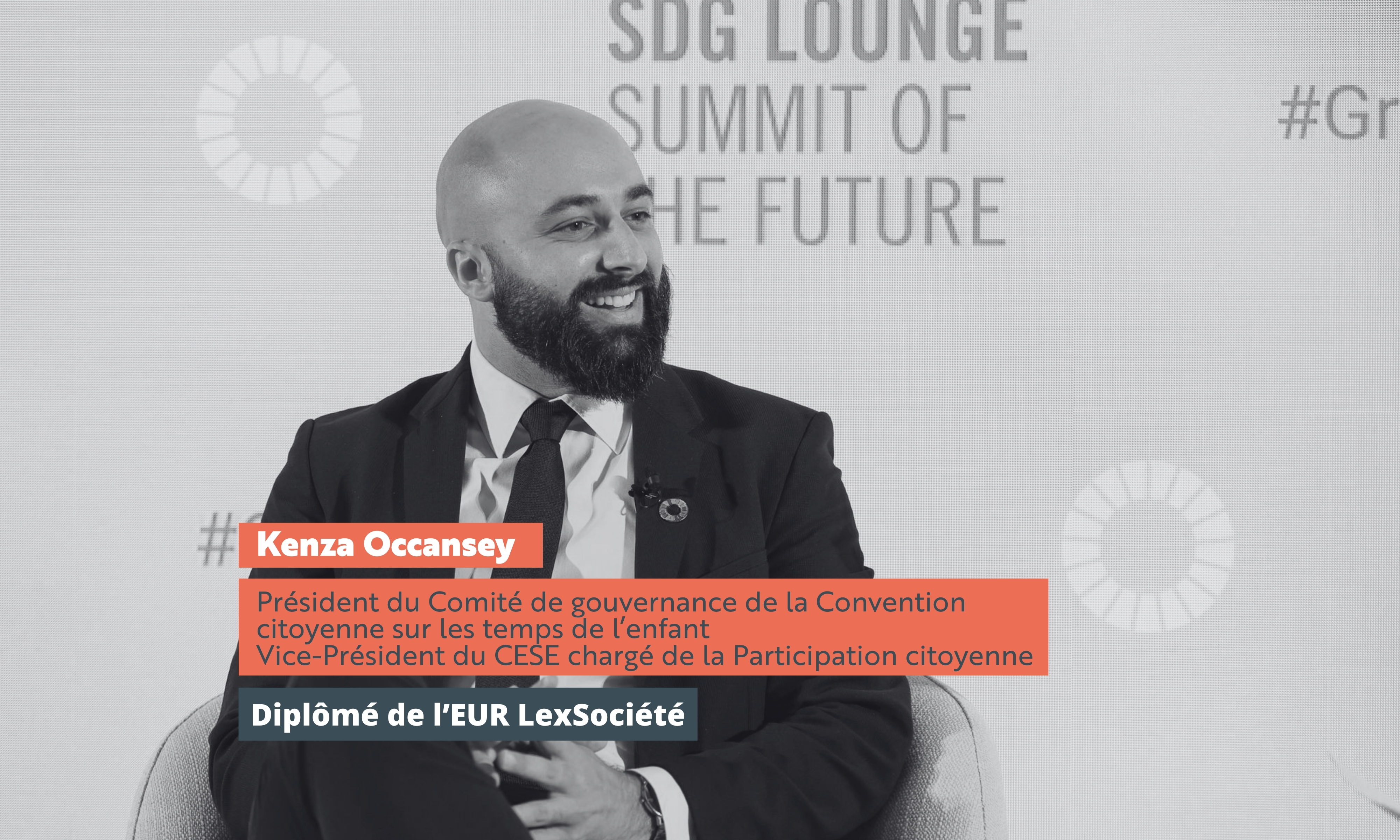
From her early student commitments at the Université Côte d'Azur to her leadership of a vast Citizens' Convention at the CESE (Conseil économique et social et environnemental) on the subject of children's rhythms, Kenza Occansey has built a career in which commitment, participatory democracy and service to the community form a common thread.
Just a few years after his debut, he shares the key stages of an atypical career path, marked by the conviction that citizens, young and old alike, must regain their place at the heart of public decision-making.
How did your involvement begin?
It all began at the Université Côte d'Azur, when I was studying for my degree in Law and Political Science.
It was during these years that I discovered the student association sector. I was elected president of the Law BDE, then joined FACE 06. Then, between my bachelor's and master's degrees, I took a two-year break to get fully involved with the FAGE, spending two years in Paris. University led me down the path of commitment, and that's what still shapes my life today. I'm deeply grateful for that.
What did you do after your gap year?
In M1, I resumed my studies in Nice, then went on to do a M2 in Business Intelligence at the Université Gustave-Eiffel. From March onwards, the COVID forced me to stay in confinement: apart from my defense, I never set foot in the university again.
In September 2020, the FAGE, which has a seat on the CESE, was looking for someone to represent it. As I had just finished my term of office with the organization, I became a representative at the CESE.
At the same time, I had always worked in activities related to my studies: first in a communications agency, as a consultant to trade unions, NGOs and political parties. Then I had a new opportunity: for two years, I was Chief of Staff to the President of Paris 3 University. It was another way of extending my academic commitment.
What role has the EESC played in your career?
In 2021, the EESC formally structured its citizen participation work. This year was essential for me: I was able to defend the voice of young people and students, and integrate them into the decision-making process.
In May 2025, the President of the Republic and the Prime Minister referred the issue of "children's time" to the EESC. The President of the CESE asked me to steer the process from May to the end of November. The subject was immense: school rhythms, screens, family, health, sport, culture, free time... We had to tackle everything.
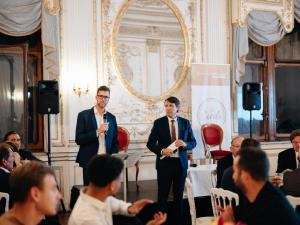
We defined a methodology, drew 130 citizens at random from 200,000 people, and organized a series of events and workshops. We consulted nearly 500 people in the regions, including 100 children aged 6 to 11 and around 20 teenagers selected by lottery. Over seven working sessions, 130 people worked together from Friday to Sunday, culminating in the report submitted on November 23.
The report counts, of course, but understanding how it was produced is even richer. Getting people to work together, supporting them and creating something that reflects them: that's another way of doing politics.
Were you surprised by the convention's impact?
Yes and no. Yes, because it revived a debate on school rhythms, abandoned since 2013. The media response was beyond what I had imagined.
I was less surprised, however, because during the course of the project, we sensed that a real momentum was building. The subject speaks to everyone: it was a buoyant theme.
What are the future challenges linked to this work?
Firstly, to ensure that the subject remains firmly on the political agenda. Secondly, we need to ensure that the convention's proposals are incorporated into discussions, particularly in the run-up to the elections. The EESC and citizens have done a remarkable job; now it's up to politicians to live up to what has been achieved.
What do you personally take away from this experience?
Tiredness! Practicing democracy differently is demanding. Building consensus is extremely difficult. This experience has profoundly transformed me: I've learned that the people who live the situations on a daily basis are just as legitimate as the experts. We're more successful when we do things differently.
What are your plans for the future?
I'm at the EESC until April 2026. After that, I'll be moving on to new adventures. Several opportunities are already opening up.
What would be your ideal job?
Probably the head of an NGO or a local authority. I'd like to work in a position that's close to the field, combining commitment and community work, in line with what I've been doing since my university days.