INTERVALLLE: Physical Activity, a Social Issue, with Anne Vuillemin
- Science and society
- Research
on the June 1, 2026
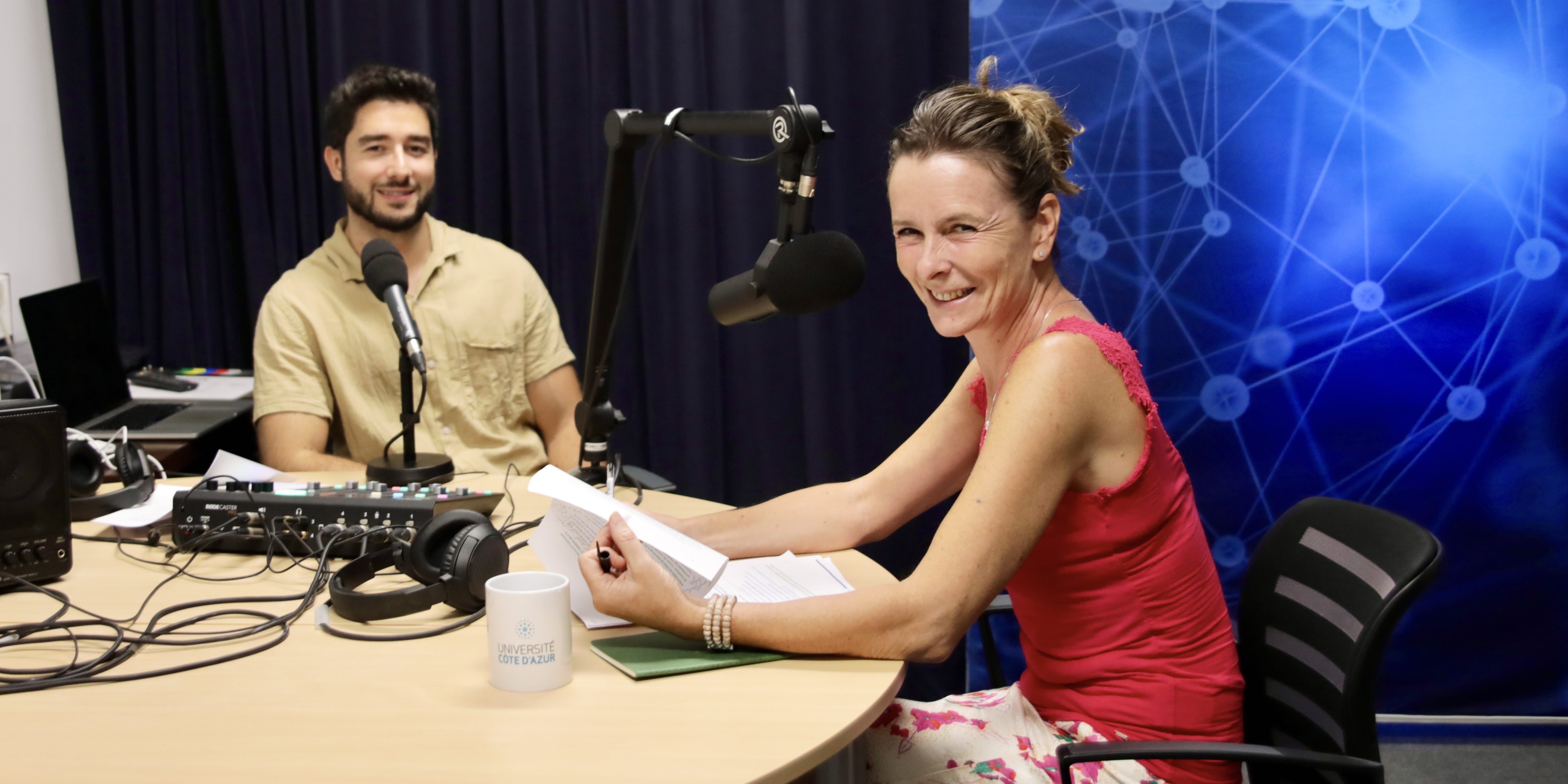
What are the differences between physical activity and sports? Why have we become so sedentary? How can we encourage physical activity among the general public? What are the economic impacts? A fascinating conversation with Anne Vuillemin, a professor at Université Côte d’Azur, that makes you want to get moving!
The third episode of the INTERVALLE podcast is now available
An episode featuring Anne Vuillemin, professor of Sports Science at the Laboratory of Human Motor Skills, Sports, and Health Expertise (LAMHESS) at the University of Côte d'Azur and director of the HEALTHY University Research School at the University of Côte d'Azur.
It’s no secret that physical activity contributes to our overall health. On an individual level, the list of its benefits is long: improved sleep quality, mood, heart function, and more. However, the positive effects extend beyond health and influence many sectors. Anne Vuillemin, a researcher at the Laboratory of Human Motor Skills, Expertise, Sport, and Health (LAMHESS) at Université Côte d'Azur, explains:
"Physical activity is a powerful tool. It can help meet environmental goals by encouraging walking or cycling, contribute to education by helping people understand how the body works, and impact urban planning through the creation of bike lanes and sidewalks.”
The socio-economic stakes are also significant. According to a 2022 report by France Stratégie, the social cost of physical inactivity is estimated at 140 billion euros per year—a figure corresponding to more than 38,000 deaths and 62,000 health conditions caused annually. However, although the link between physical activity and health is now well-established, getting people to move more is no easy task.
Multiple Actions for Multiple Solutions
Promoting physical activity is a key focus for Anne Vuillemin. The researcher explains that there are many initiatives, but they must be implemented simultaneously to reinforce one another, create a positive dynamic, and lead to a virtuous cycle.
“It is the variety of solutions, working in synergy, that will enable everyone, at some point in their lives, to engage in physical activity.”
There are two types of solutions to distinguish: initiatives in the environmental sphere, aimed at making the environment conducive to physical activity, and initiatives tailored to the individual, based on their specific needs. In the first case, this involves utilizing public spaces to create environments conducive to physical activity. This includes the development of parks and sidewalks or the construction of sports fields, as well as local communication campaigns to promote these spaces. The second type of solution involves actions taken directly with an individual. Anne Vuillemin explains:
“We focus on their behavior and motivations to understand what will encourage them to engage in physical activity, as there are factors unique to each individual. Local support services guide this shift in attitude, but the help of their social circle is also essential to provide a form of social support.”
Physical Activity, Sports, and Society
We talk about physical activity as soon as our bodies start moving. This includes our daily activities, such as walking to the train station, or regularly playing a sport. Between the 2024 Olympic Games and the 2023 Rugby World Cup, one might imagine that French people would be galvanized by this sporting momentum. The reality presented by Anne Vuillemin is quite different:
“We recently published a study summarizing the issue of major sporting events and found that there was no effect—neither immediate nor delayed—on the population’s level of physical activity.”
Although there is a link to sports participation, the stakes of these events lie elsewhere and do not contribute to the promotion of physical activity.
Furthermore, for the past twenty years or so, physical activity has been a major focus of policy: strategies, plans, research—sports have even been declared a “Great National Cause for 2024” by the President of the Republic. However, the resources available to implement and evaluate these policies are limited, as is the budget allocated to promoting physical activity for health purposes. Anne Vuillemin asks:
“Is this really a priority? There are numerous initiatives, but they are not optimally coordinated. There is a need to improve the cross-cutting roles of physical activity in policy.”
Thus, on paper there is no doubt: physical activity has an impact across multiple sectors, whether health, the economy, urban planning, or transportation. However, in an increasingly sedentary world, there is still a long way to go to make it accessible and appealing.
INTERVALLE, the science podcast from Université Côte d'Azur
INTERVALLE is a podcast produced by the Science and Society department at Université Côte d'Azur and available on all streaming platforms. This podcast is for anyone with a curious mind and a thirst for discovery! In each episode, a researcher from Université Côte d'Azur takes you on a unique journey into the heart of their research!